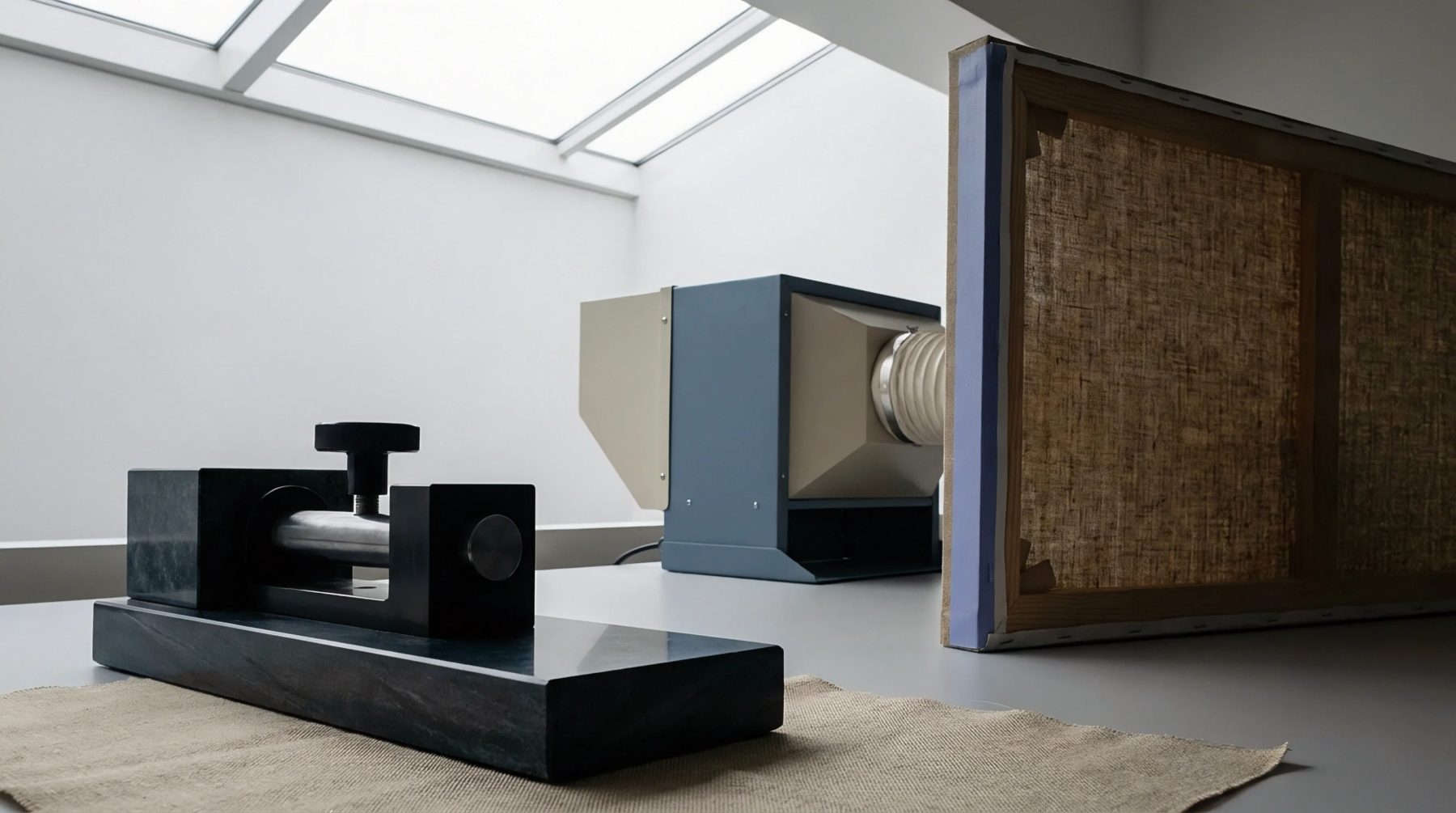
Loom Setting
Mechanical adjustment on a loom controls the vertical and horizontal location of the beam that guides warp yarns into the weaving zone. The backrest position determines the angle of the warp sheet as it enters the heddles and dictates the tension distribution between the top and bottom sheds. It governs the geometry of the shed opening and identifies the limit where yarn stress might lead to breakage.
Tension Management
Tension levels increase when the beam moves away from the harnesses because the yarn path becomes longer during the opening of the shed. Higher placements produce a more prominent weave texture while lower settings facilitate a smoother fabric face. Small adjustments to the backrest position allow the weaver to compensate for the inelastic nature of linen fibers.
The operator measures the distance from the breast beam to ensure the frame remains square. Precise alignment prevents the reed from striking the yarn at an oblique angle which often causes premature wear.
Woven Character
Surface uniformity depends on maintaining a stable beam height throughout the entire roll of fabric. Variation in the backrest position creates visible defects known as barre or shading in the finished linen. Consistent settings are mandatory for high-grade export cloth.