Tooling Density
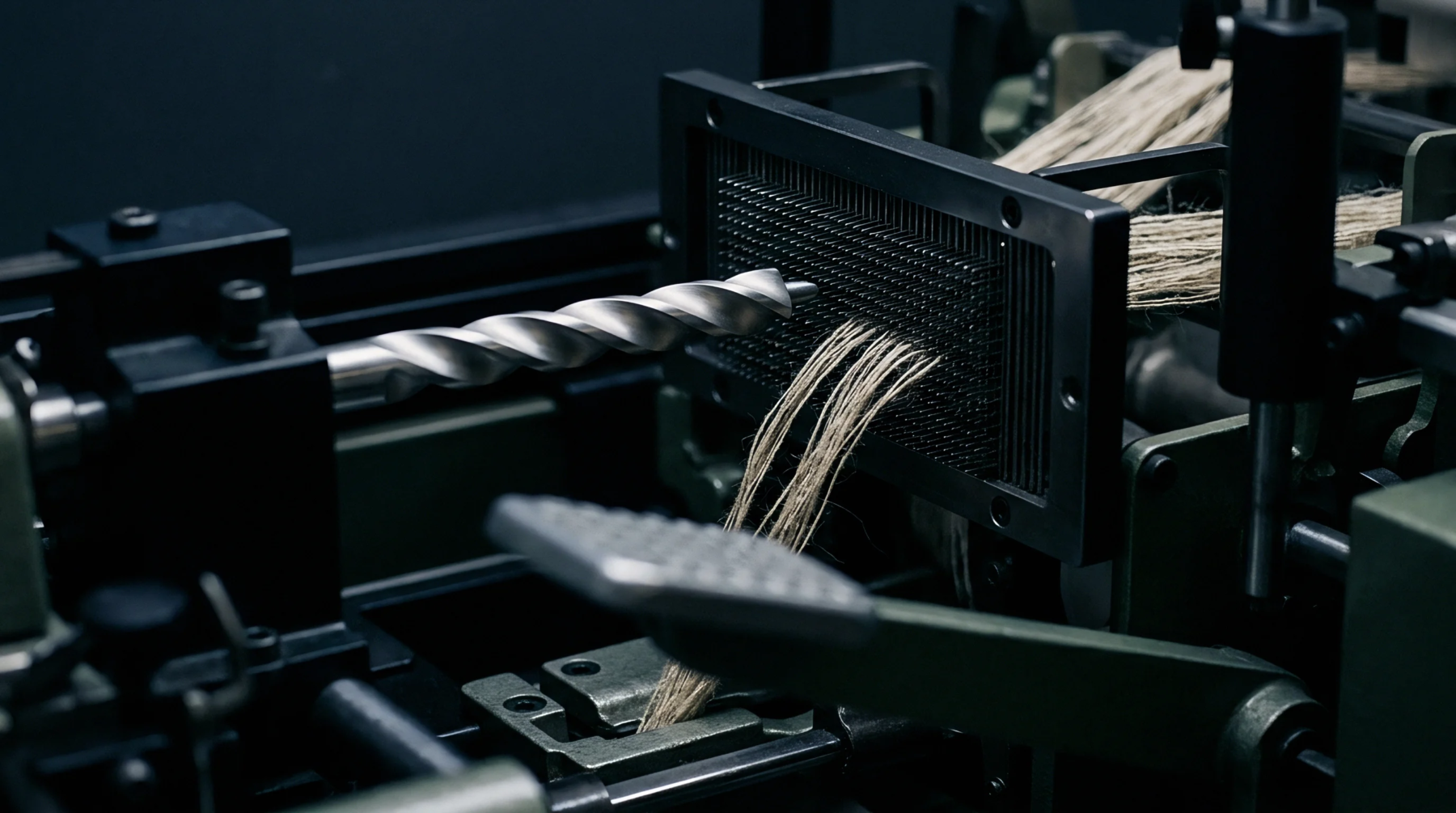
Linear density specification on the hackling machine sheet defines the needle spacing on each faller bar used to refine the flax. Choosing the correct pins per centimeter is the main way to control the degree of fibre splitting during processing. This value increases as the sliver moves from the initial preparation toward the final spinning frame.
Fiber Penetration
Coarse fallers with a low number of pins per centimeter are used to open the raw flax and remove large impurities. As the material becomes more refined the machines use fallers with a much higher density to ensure that even the smallest tangles are straightened. The physical capacity of the faller bar limits the maximum number of pins that can be installed without compromising the strength of the needles.
In many Chinese mills the transition from coarse to fine pinning is managed across four or five gilling passages to gradually increase the quality of the sliver.
Sliver Refinement
Success of the combing operation depends on the pins being able to penetrate the entire thickness of the fibre mass. If the pins per centimeter is too high for the volume of the sliver the needles will bend under the pressure. Proper machine settings match the pin density to the weight of the sliver to maintain efficient production.