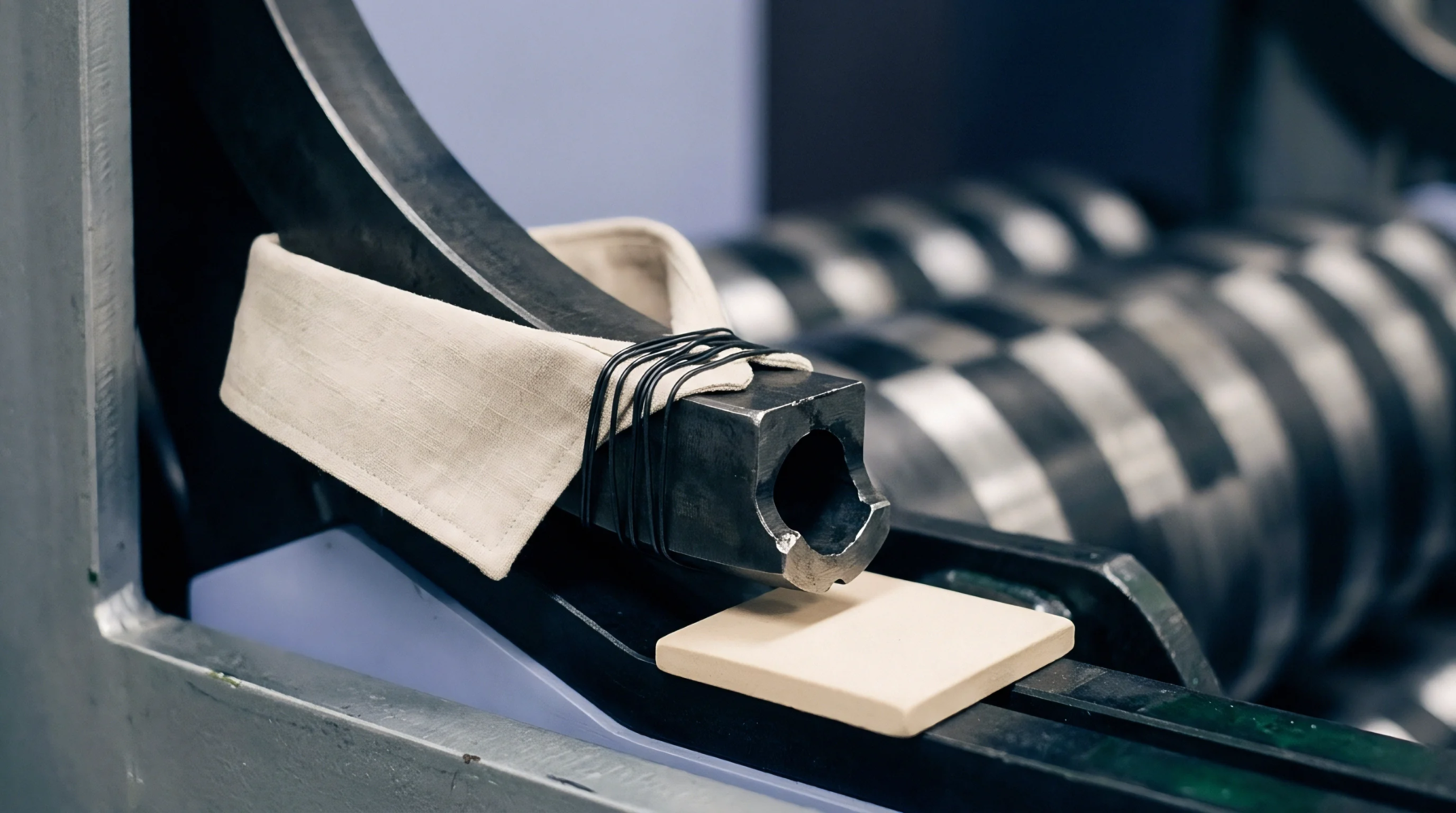
Processing Interruption
Mechanical loom stoppages occur when a warp thread breaks or loses tension during high-speed weaving, causing a metallic contact to fall and complete an electrical circuit. In modern linen weaving mills, drop wire faults denote these specific halts triggered by the drop wires of the warp stop motion assembly. Automated loom sensors detect the fallen wire to prevent the insertion of defective weft yarn.
Mechanical Origin
Moisture and dust accumulation on the sliding contact bars represent the primary source of false signals. Fine flax dust generated during high-speed weaving can settle between the contact elements, creating high resistance that prevents the sensor from registering a true break. Regular vacuuming and humidity control within the weaving shed are necessary to maintain electrical conductivity.
Operational Impact
Correcting these mechanical disruptions requires the operator to locate the fallen wire, repair the broken warp yarn, and restart the loom. In high-efficiency mills, drop wire faults cause substantial production delays that decrease the total yield of the weaving room. The physical friction of the warp yarn passing through the drop wire eyelet can also create hairiness on the yarn surface, which leads to further tangling.
Optimizing yarn sizing during the preparatory stage minimizes the warp yarn breakage rate and keeps loom efficiency high.