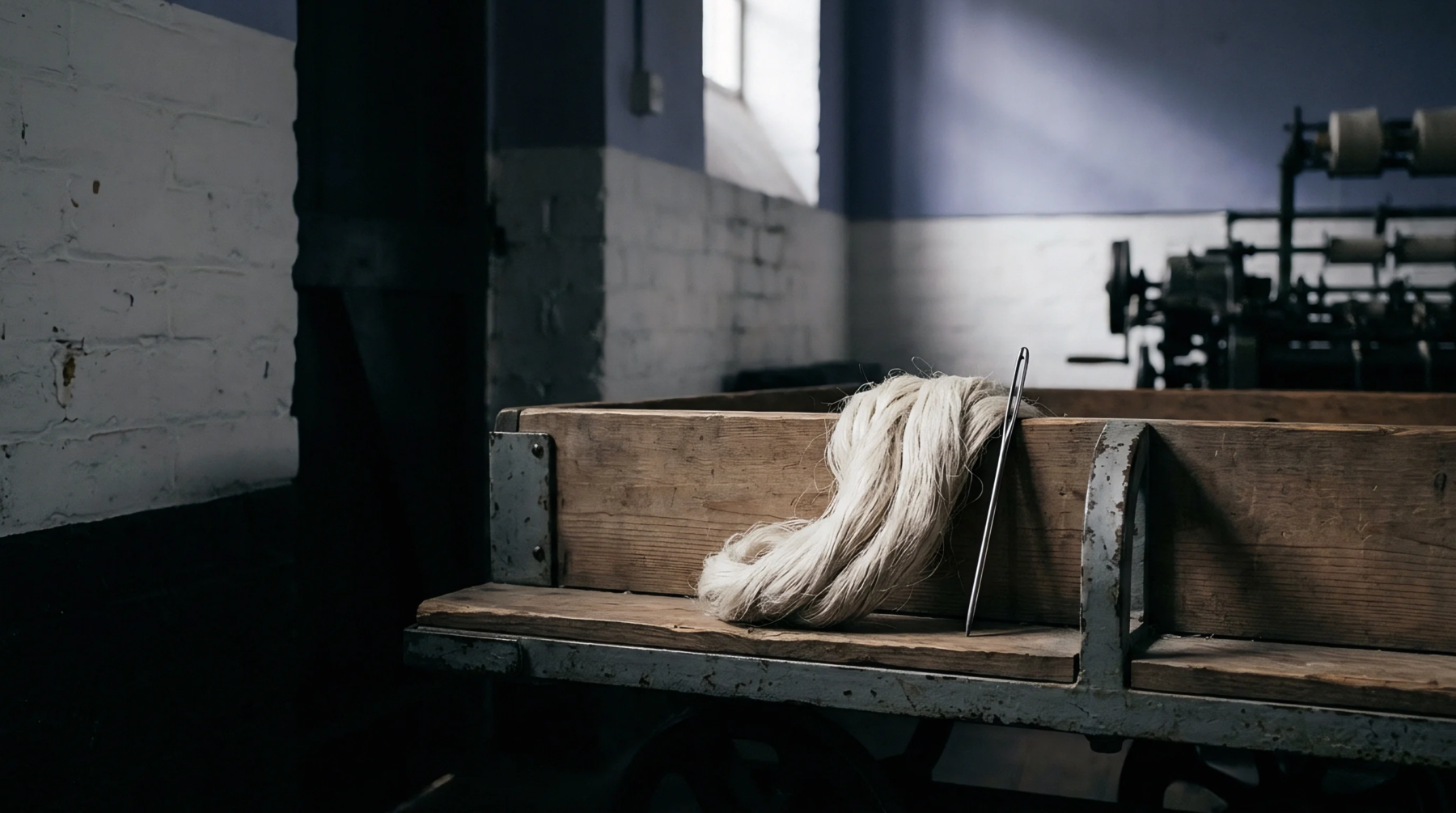
Fiber Provenance
Verification protocols in Chinese linen mills confirm where long-line flax originates through mandatory farm origin declarations before physical processing begins. Chain of custody flax maintains physical segregation from farm gate through hackling machinery, preventing commingling between organic lots and conventional material. Mill managers record bundle weights in accompanying batch dockets during each shift change.
Bales arriving at regional sorting facilities carry origin documentation that must match administrative clearance certificates issued by provincial agricultural bureaus.
Grade Transition
Sorting supervisors evaluate raw straw rigidity and color uniformity to establish baseline staple lengths prior to wet spinning operations. Fiber grades differ from finished fabric classifications because mechanical carding alters tensile strength parameters before yarns reach industrial looms. Acceptance criteria set by export buyers demand higher micronaire counts than internal mill standards require for domestic utility cloth.
Quality control inspectors verify twist levels on roving frames using digital tensiometers before bobbins proceed to sizing departments.
Export Clearance
Finished yarn packages undergo residual moisture testing in climate-controlled laboratories prior to final container loading for overseas distribution manifests. Customs documentation tracks physical weight loss across chemical scouring vats to reconcile raw material inputs against finished goods output. Final trade settlement depends upon laboratory certificates confirming zero synthetic fiber contamination within certified pure flax shipments.
Commercial release documents record specific warehouse bin numbers where verified lots wait for carrier dispatch.