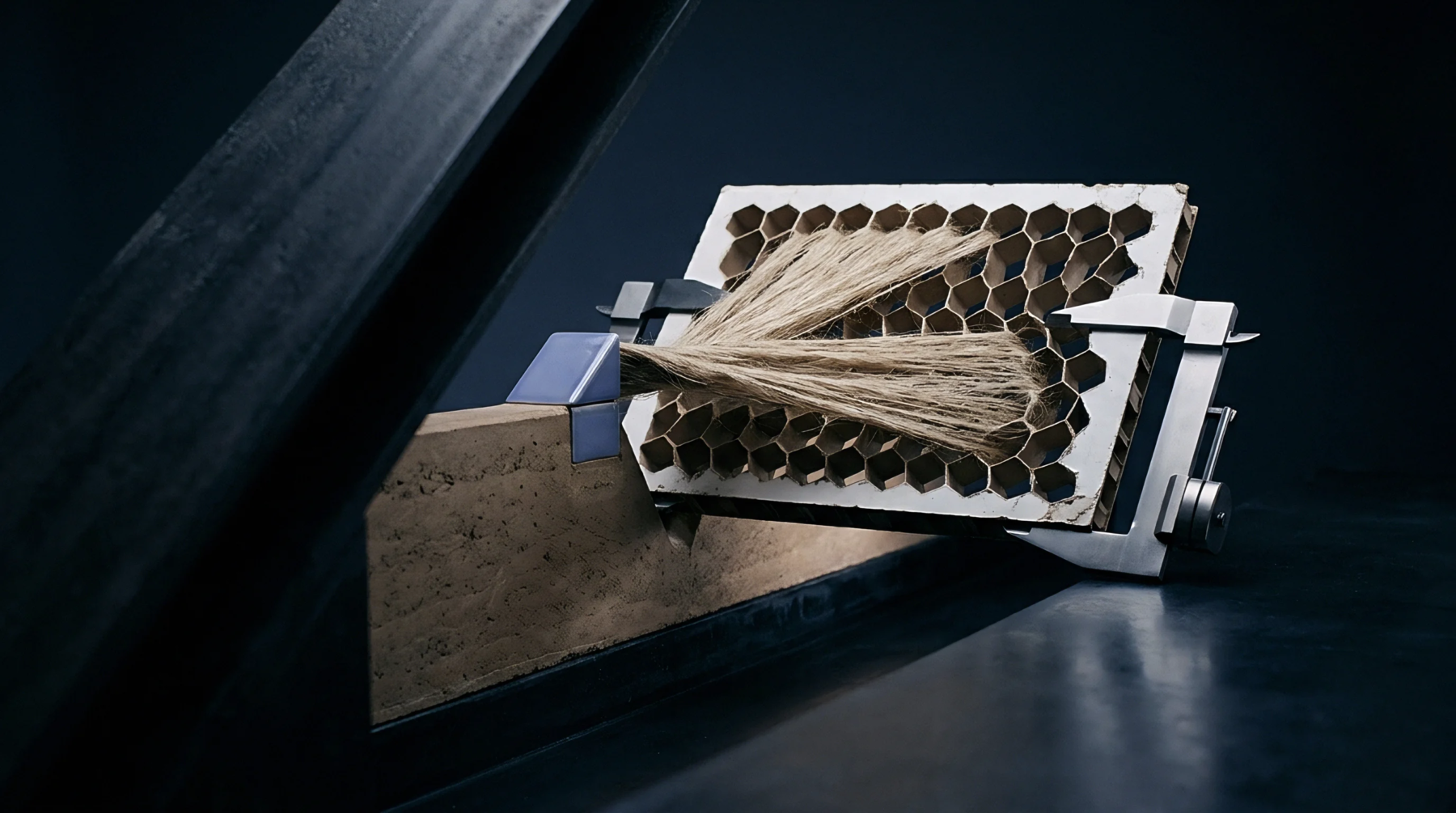
Deflection Threshold
Deformation magnitude occurs when a loom component undergoes temporary displacement under load. Beam flexure describes this structural response during the cycle of high tension required to maintain warp alignment on a weaving machine. Rigid steel cylinders supporting the warp supply sustain specific force gradients to prevent shed geometry collapse.
Heavy yarn densities require higher rigidity to ensure the metal does not bend beyond the elastic limit.
Dimensional Stability
Variations in internal pressure between the left and right side of the frame alter the shed opening height. Proper sizing of the steel wall thickness prevents permanent bending during the accumulation of thousands of meters of linen. Engineers calculate the moment of inertia to resist these forces and maintain uniform tension across the entire width of the loom.
If the structural support yields excessively the reed strikes the fell at an angle and creates uneven pick density in the finished fabric.
Compliance Verification
Production inspectors verify these mechanical tolerances by measuring the horizontal deviation of the warp support axis while the machine operates at full capacity. Technical reports document the measured displacement against the manufacturer specifications to ensure consistency in the output of flax textiles. High quality linen production requires zero observable drift in the support profile to avoid warp striping or irregular weave patterns.
Accurate alignment during the installation of a new loom beam minimizes structural fatigue over the service life of the machine.