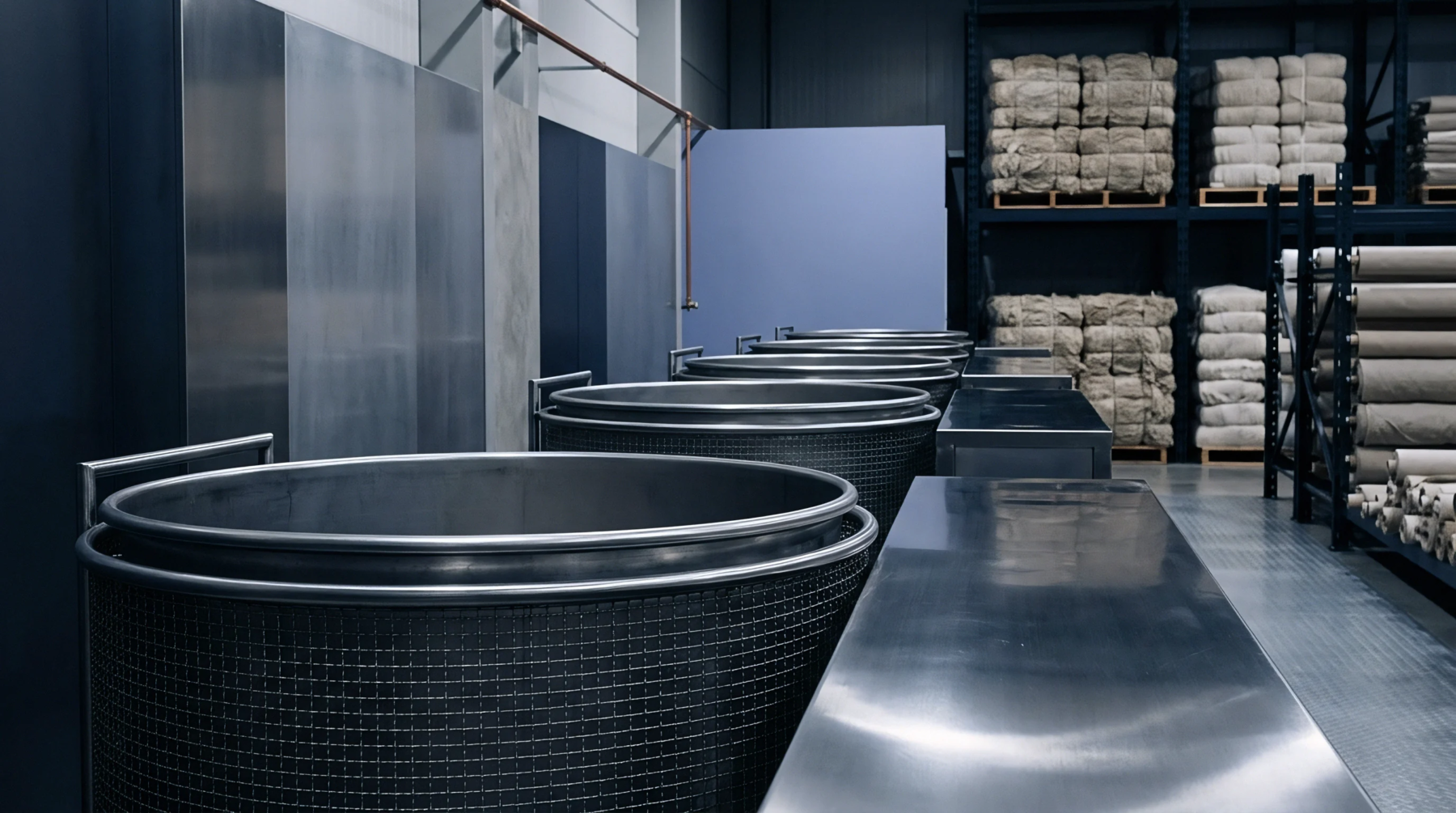
Chemical Neutralization
A wet-finishing chemical stage neutralizes residual alkaline liquor and hydrolyzes trace metal salts within raw flax tow or yarn packages after alkaline scouring. During this stage, acid souring introduces dilute organic or inorganic acid baths, typically acetic acid or citric acid, to bring the wet substrate to a slightly acidic pH. This process prevents alkaline yellowing during high-temperature drying and neutralizes sodium hydroxide trapped inside the dense cell walls of bast fibres.
The boundary of this treatment stops at chemical neutralization, as it does not perform primary bleaching or remove natural waxes.
Residue Control
Quantitative testing of rinse liquor verifies the removal of solubilized minerals and alkaline residues before hot-air drying. In Chinese finishing plants, acid souring reduces calcium and magnesium salts that accumulate during scouring in hard industrial water. Failure to neutralize these deposits causes needle breakage during downstream sewing and produces uneven dye uptake in continuous pad dyeing.
Laboratory technicians record bath pH and residual acid concentration on the wet-processing routing sheet.
Tensile Preservation
Controlled acid concentration protects cellulose macromolecular chains from excessive depolymerization during elevated drying temperatures. When bath concentration exceeds specified limits, acid souring degrades the degree of polymerization in flax cellulose, reducing single-yarn tenacity. Mills establish upper acidity thresholds to prevent fabric embrittlement while ensuring complete alkali neutralization.
The final quality certificate logs tensile retention values beside the acid wash parameter to confirm buyer acceptance compliance.